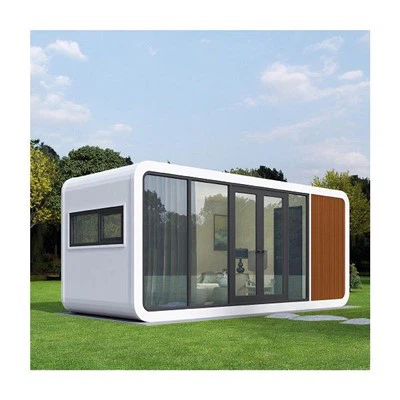

If you’ve ever walked past a tiny, apple-shaped cabin tucked in a community garden, a mountain overlook, or a backyard that’s short on space but big on personality, you might’ve wondered: who insures something so unique? As the owner of a small tiny apple cabin supply company, I field this question at least three times a week—usually from café owners looking to turn a vacant patio into a cozy pop-up, park managers wanting to add a quirky information hub, or even homeowners testing out a “tiny guest” space before committing to a full ADU. The short answer is yes, insurance is available for a tiny apple cabin—but it’s not as straightforward as insuring a standard shed or a full-sized home. To break this down, let’s start with what makes our apple cabins different, how underwriters assess unique structures, and what steps you can take to get coverage that fits your needs.


First, it helps to define exactly what we build. Our tiny apple cabins aren’t the rickety, DIY “treehouse adjacent” structures you might see at a neighborhood garage sale. We engineer every unit (whether it’s an 80-square-foot apple-shaped shop or a 120-square-foot office) with the same structural standards as tiny homes: pressure-treated framing, fire-resistant exterior cladding (we use heavy-duty vinyl that’s rated for UV exposure and wind speeds up to 100 mph), and reinforced foundations (wait—speaking of foundations, that’s a big part of why underwriters care so much about these cabins). Most of our units are available in two core designs, which you can browse here: Apple Cabin Office for use as a checkout station, booking kiosk, or small business office, and Apple Cabin Shop for selling local crafts, coffee, or produce. Both are transportable, so they can be moved to new locations (a huge plus for businesses that lease their space) but that also plays into how insurance companies categorize them.
So why would a tiny, apple-shaped structure be harder to insure than a run-of-the-mill shed? Underwriters base coverage on risk, and unique structures come with unique risk factors that standard home insurance or even shed insurance policies don’t account for. Let’s walk through the biggest hurdles we’ve seen customers face, and how we’ve worked with them to overcome them.
The first big factor: classification. When you tell an underwriter you have a “tiny apple cabin,” their first question is: is this a movable structure, a fixed structure, a temporary structure, or a business asset? Most of our customers use these cabins for business purposes, so that’s where the complexity starts. A standard shed insurance policy won’t cover a tiny apple cabin that’s set up as a retail shop, for example, because it’s generating income. A personal homeowners policy might cover a unit in your backyard as a guest retreat, but only if it’s permanently attached to a foundation (no wheels allowed) and used exclusively for personal, non-business purposes. We had a café owner in Portland last year who tried to insure her apple shop under a standard business property policy, and it was denied because the underwriter classified it as a “specialty structure” with no data on historic claim rates for apple-shaped buildings. The problem wasn’t that the cabin was high-risk—it was that the insurance company’s database didn’t have a category for it.
That’s where working with an agent who specializes in unique or niche properties makes all the difference. We’ve built relationships with a few independent insurance agents across the U.S. who regularly work with tiny home suppliers, pop-up businesses, and specialty recreational structures, and they’ve learned how to frame the apple cabin as a low-risk asset. For example, when we provide our customers with the engineering blueprints, material safety certifications, and load test results (we test every cabin’s ability to hold up to heavy snow, wind, and even accidental impacts from delivery vehicles), that gives underwriters concrete data to evaluate, not just a “weird apple-shaped hut.”
Another key risk factor: location. Where you place your tiny apple cabin has a bigger impact on insurance than the structure’s shape, even more so than the shape itself. If you’re situating your cabin in a flood zone, near a wildfire-prone area, or in a location with high rates of theft or vandalism, your premiums will go up—just like they would for any other property. But here’s where tiny apple cabins have an advantage: because they’re compact and often very distinctive, most theft claims we’ve seen for these units are minimal. We’ve only had one customer report a theft of an apple shop in three years, and that was when they left the front door unlocked for a week during a local festival; the only thing stolen was a $20 display of local honey, not the cabin itself. Vandalism is a bit more common in high-traffic urban areas, but most policies cover vandalism as long as there’s visible damage to the structure, and our cabins have sturdy lock systems (we offer reinforced steel doors as an optional add-on) that most small businesses use.
Wait, but what if you’re using your apple cabin as a personal space? A lot of homeowners reach out to us asking about using their tiny apple cabin as a guest room, a home office, or even a tiny primary residence. For these use cases, the rules are different. If it’s fixed to a permanent foundation (no wheels, so it’s not transportable), you can often add it as an “other structure” rider to your existing homeowners insurance policy. But if it’s mobile (set on a trailer, which is how most of our customers configure them for easy moving), that changes things. A mobile tiny apple cabin used as a personal retreat would fall under either a mobile home policy or a specialty tiny home insurance policy, depending on its size and construction. The key here is that mobile tiny home policies are designed for structures that are built to be moved, so they account for the unique risks of transport, as well as the use of the cabin once it’s set up. We’ve had a customer in Colorado who uses his apple cabin as a ski chalet for guests; he added it to his mobile home policy, and his premium was about 15% higher than a standard travel trailer, which was worth it to get coverage for his custom-built wooden interior and the specialized ski equipment he stores there.
One thing we emphasize to every customer is the difference between property insurance and liability insurance, because both are critical—especially for commercial use. If your apple cabin is a shop selling local goods, you need general liability insurance to cover a customer who slips on a spill in your shop, for example. Most commercial property policies will bundle liability coverage for specialty structures, but again, you need to work with an agent who understands that a tiny apple shop isn’t the same as a full-sized grocery store. We had a customer in Austin who thought she only needed property insurance for her apple shop, and when a customer tripped over a loose floorboard and sprained their ankle, she learned that her policy didn’t cover the medical costs. Adding a general liability rider fixed that, and the premium was less than $500 a year, which is a small cost compared to a potential lawsuit.
Now, what about the myths I hear all the time? First myth: “It’s so small, I don’t need insurance.” That’s a big one. Even an 80-square-foot apple cabin has thousands of dollars in value: the materials, the custom finishes, the built-in shelving, the electrical and plumbing if you add those. If a storm rolls through and damages it, or a fire starts in the electrical system, you’ll be stuck paying to repair or replace it out of pocket. Second myth: “I can’t get insurance for something so unique.” We’ve had customers insure apple cabins in all sorts of places: national parks, urban rooftops, coastal areas, even a vineyard in Napa that uses an apple cabin as a tasting room. The only time we’ve struggled to find coverage was when a customer wanted to place their cabin in a 100-year flood zone and didn’t want to invest in flood-resistant cladding—but once they added the reinforced vinyl we recommend, we found an agent willing to work with them.
Here’s the process we walk every customer through when they’re ready to get insurance for their tiny apple cabin: first, confirm how you’re using the cabin (personal, commercial, rental) and whether it’s fixed or mobile. Second, get the structural documentation from us—we provide engineering certificates, material safety data sheets, and load test results for every unit, which are non-negotiable for underwriters. Third, connect with an independent insurance agent who has experience with specialty properties (we can share a list of vetted agents across the U.S. if you don’t have one already). Fourth, disclose all details about your location: if you’re in a flood zone, wildfire zone, or high-theft area, be upfront about that—hiding risks will only lead to a denied claim later. Fifth, compare quotes: don’t just go with the cheapest option; make sure the policy covers replacement cost (not just actual cash value, which would depreciate the value of your cabin over time) and includes liability coverage if you’re using it for business.
For our part, we’re always looking for ways to make insurance easier for our customers. Last year, we worked with a small insurance tech company to create a quick insurance quote tool for our customers, which asks a few simple questions about use, location, and structure, and pulls from our pre-vetted agent network. It’s not a substitute for working with a real agent, but it gives customers a starting point so they know what to expect before they even reach out.
At the end of the day, whether you’re a small business owner looking to launch a unique pop-up, a park manager wanting to add a memorable information hub, or a homeowner testing out a tiny guest space, your tiny apple cabin is an investment—and insurance is how you protect that investment. It’s not a one-size-fits-all solution, but with the right prep, the right documentation, and the right agent, you can get coverage that fits your needs and your budget.
If you’re ready to learn more about our tiny apple cabins, whether you’re browsing the office design or the shop design, we’re here to help you walk through every step—from ordering to insurance planning. Reach out to our team to discuss your needs, and we’ll connect you with resources to make your tiny apple cabin journey as smooth as possible.
References
- National Association of Insurance Commissioners. (2022). Specialty Property Insurance Guide: Niche Structures and Unique Assets. NAIC.
- Tiny Home Industry Association. (2023). Insurance Best Practices for Tiny Residential and Commercial Structures. THIA.
- Insurance Information Institute. (2021). Liability Coverage for Small Businesses: What You Need to Know. III.
- Federal Emergency Management Agency. (2022). Flood Insurance for Specialty Structures and Mobile Assets. FEMA.