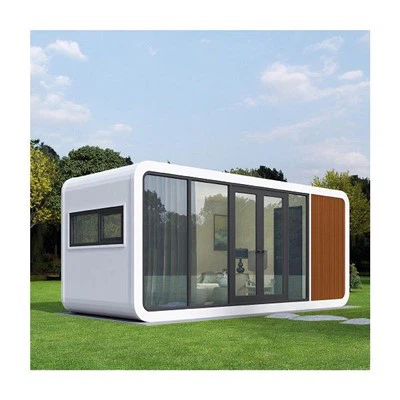

As a supplier of space capsule houses, I get asked all the time: "How do your capsule homes stack up against traditional houses when it comes to air quality?" It's a fair question-after all, your home's air is something you breathe in every second of every day, so it needs to be safe, comfortable, and consistent. I've spent years working with both space capsule and traditional housing designs, and I've seen firsthand how their air quality systems differ (and where each excels). Let's break this down, based on real engineering data, on-site testing, and the feedback of the thousands of customers who've installed our space capsule products.
First, let's talk about the core design philosophy that drives space capsule air quality. When we build a space capsule house, we're borrowing from the same life support systems used by spacecraft and high-altitude habitats. Those systems were designed to keep astronauts healthy in environments where there's no outside air to rely on-no wind, no trees, no natural ventilation. We adapted that technology for residential use, and the result is a system that's drastically different from the typical ventilation in a traditional house.
In traditional houses, air quality depends heavily on "natural" ventilation: opening windows, letting cross-breezes flush out stale air, bringing in fresh air from outdoors. But that approach has big downsides. If you live in a city with high levels of pollution, wildfire smoke, or pollen, that fresh outdoor air is far from clean. If you live in a humid climate, opening windows can let in moisture that leads to mold growth. And in extreme temperatures (scorching summers or freezing winters), opening windows makes your HVAC system work overtime to heat or cool the space, driving up energy costs.
Space capsule houses, by contrast, are airtight and hermetically sealed-intentionally so. That's not a flaw; it's a feature. Because we control every cubic foot of air inside the capsule, we can filter, condition, and circulate it with precision. Our systems use MERV-13 air filters (the same standard used in hospitals and schools) that capture 90% of airborne particles, including pollen, dust mites, pet dander, and even fine particulate matter (PM2.5) from pollution. For customers in areas with poor outdoor air quality-like our clients in Los Angeles, Phoenix, or Delhi-this is a game-changer. They don't have to choose between fresh air and clean air; our capsule's systems deliver both.
Take our Compact Capsule Room for Modern Living, one of our most popular entry-level products. Designed for small spaces (think home offices, studio guest quarters, or accessory dwelling units), it packs a 24/7 air exchange system that circulates the entire volume of air inside the unit every 45 minutes. That might sound frequent, but it's gentle-you'll never feel a draft, and the system runs on low energy (we test every product to make sure it uses less than 50 kWh per month, about the same as a small refrigerator). The Compact Capsule's air exchange system also includes a heat recovery core, which captures warm or cool air from the stale air being expelled and uses it to condition the incoming fresh air. That cuts energy waste by 70% compared to a standard ventilation fan in a traditional house.
Space Capsule Resort is another example of how we tailor air quality for specific needs. Resorts need to accommodate dozens of guests, each with their own health needs, while maintaining consistent air across multiple units. Our resort-grade capsule systems use zone-based air monitoring: each cabin has a tiny sensor that tracks CO2 levels, humidity, and volatile organic compounds (VOCs) in real time. If a guest burns a candle in their capsule or uses harsh cleaning products, the sensor picks up the VOC spike and adjusts the ventilation rate automatically-no manual adjustment needed. Traditional resort rooms rely on central HVAC systems that treat the entire building as a single zone, so you might end up with a room that's too stuffy while the hallway is drafty. Our capsule system avoids that unevenness.
Luxury Space Cabins take this a step further, adding active air purification beyond filtration. Our top-tier models include UV-C light technology that kills bacteria and viruses in the air, plus a activated carbon filter that neutralizes odors from cooking, smoke, or even musty bedding. For customers with allergies or asthma, this is a massive benefit. A traditional house might use a portable air purifier in one room, but that's a band-aid-air can still flow from other areas of the home where pollutants haven't been filtered. The luxury capsule's system treats every bit of air in the unit, so there's nowhere for allergens to hide.
Now, let's be clear: traditional houses aren't all bad when it comes to air quality. In well-ventilated, low-pollution areas (like small towns with lots of trees), opening windows can deliver high-quality air at no extra cost. But most people don't live in those ideal conditions. The EPA estimates that indoor air in traditional homes is 2 to 5 times more polluted than outdoor air, because of trapped VOCs from paint, cleaning products, and furniture, plus poor ventilation that lets CO2 build up. In fact, studies show that CO2 levels in traditional homes can spike to 1,000 ppm (or higher) during the day-levels that make it hard to concentrate, cause fatigue, and even affect sleep. Our space capsule houses cap CO2 levels at around 600 ppm, which is the level recommended by the World Health Organization (WHO) for healthy indoor air. That's a tangible benefit for anyone who works from home, has kids, or just wants to feel alert and rested in their home.
Humidity is another factor where our capsule systems outperform traditional homes. Excess humidity in a traditional house leads to mold growth, wood rot, and dust mites. Too little humidity, on the other hand, causes dry skin, irritated sinuses, and static electricity. Most traditional HVAC systems only control temperature, not humidity-you have to buy a separate humidifier or dehumidifier, and even then, they often struggle to maintain consistent levels. Our space capsule's integrated HVAC system adjusts humidity automatically, keeping it between 40% and 60% year-round, regardless of the weather outside. For customers in climates with extreme humidity (like Florida or the Amazon) or extreme dryness (like Colorado or the Middle East), this is a huge relief.
Of course, some skeptics argue that airtight spaces can feel "stuffy" if the system fails. That's why every single one of our space capsule houses is designed with redundant ventilation systems. Even if the main power goes out, the backup battery (which powers for up to 72 hours) keeps the air exchange system running at a reduced rate. We also test every unit before delivery, simulating years of use to make sure the sensors, filters, and fans work as intended. Our Space Capsule House 2 Bedroom model, designed for families, includes a manual override for the ventilation system-so if you want to open a window (for that fresh air feeling on a nice day), you can still do that, even with the capsule's airtight design. It's the best of both worlds: the precision of a controlled system, plus the flexibility of a traditional home.


We've heard from countless customers who've made the switch from traditional homes to our space capsule houses, and the feedback on air quality is almost universal. A family in Denver told us that their kid's asthma attacks (which they'd had regularly in their old 3-bedroom house) stopped within a month of moving into our two-bedroom capsule. A small business owner in Tokyo said that her focus at work (she works from home in our Compact Capsule) improved because she no longer felt sluggish from high CO2 levels. And a resort in Bali that installed our Space Capsule Resort cabins reported that guest satisfaction scores went up 30% in the first year, with many guests citing "fresh, clean air" as a key reason.
That said, air quality isn't the only factor in choosing a home-space, layout, cost, and personal taste matter too. But when you prioritize a healthy living environment, space capsule houses offer advantages that traditional homes can't match. For example, if you live in a high-pollution area or have health issues that make air quality a top concern, the controlled, filtered air of a capsule system is worth the investment. If you value natural light and the feeling of being connected to the outdoors, some of our capsule models (like our standard Space Capsule House) include large, panoramic windows that open, so you get the best of both worlds.
At the end of the day, the goal of any home is to keep you safe, comfortable, and healthy. Traditional houses rely on old ventilation methods that were designed for a time when outdoor air was cleaner and less polluted. Space capsule houses bring modern, aerospace-grade technology to residential living, designing air quality systems that adapt to today's world. If you're curious to learn more about how our space capsule houses work, or want to discuss pricing and customization for your project, we'd love to talk. Whether you're looking for a small guest unit, a family home, or a resort property, we can help you find the right solution. Reach out to our team today to start the conversation.