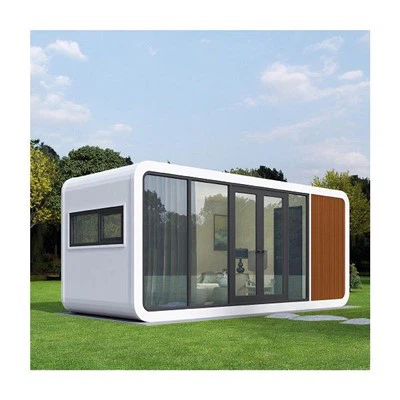

Hey everyone! Let’s cut to the chase—if you’ve ever thought flat pack containers were just for storing garage junk or crating cross-country shipments, I’m here to blow that idea out of the water. As someone who runs a flat pack container supplier, I get asked all the time: “Can these things actually work as a studio?” The short answer? Hell yeah, they can. But let’s break this down like we’re chatting over a coffee, no jargon, no fancy corporate fluff—just real talk about why this is one of the most underrated, versatile picks for artists, creators, freelancers, or anyone needing a space that’s equal parts functional and cool.
First off, let’s address the basics: what makes a flat pack container different from a regular shipping container? Flat packs, unlike their bolt-together cousins, ship unassembled, flat as a pancake, which cuts down on shipping costs by like 70% (seriously, we’ve seen clients save thousands just on transport). That means when you’re setting up a studio, you’re not paying to ship a 40-foot box across state lines—you’re shipping a stack of panels, frames, and door/window kits that fit in a standard semi. But does that mean it’s flimsy? Nope. Our flat packs are engineered with corrugated steel, reinforced corners, and a tight seal that handles wind, rain, even random backyard critters like squirrels that love chewing through studio walls. I’ve seen a 20-foot flat pack studio survive a minor tornado in Oklahoma last year—no leaks, no structural damage, just a few loose roof screws that were easy to tighten.
Now, let’s talk about size because that’s a big one for studios. You don’t need a giant warehouse—most creators need something tight, cozy, and easy to heat/cool. For solo illustrators, small music producers, or podcasters, a 10ft Flat Pack Container is the perfect sweet spot. It’s not too cramped (think: a queen bed plus a desk plus gear fits comfortably) and you can drop it in a backyard, a vacant lot, or even a rooftop (our clients in Brooklyn use them as rooftop studios all the time). For larger teams—say, a design collective or a photo studio—you can link two or three 20ft flat packs end-to-end or side-by-side to make a 40+ foot space that’s open enough for setting up backdrops or storing gear. The best part? Most flat pack studios are fully customizable, so you can swap out a solid wall for a big garage door if you need to haul in large canvases or equipment, or add skylights to flood the space with natural light—something any creator will tell you is non-negotiable.


Wait, but what about the nitty-gritty of actually using it as a studio? Let’s get real: studios need electricity, good insulation, and space for your messy stuff. Flat pack containers check all these boxes, and then some. Modern flat pack designs come pre-wired for basic electrical (we offer optional wiring kits for outlets, lights, and even HVAC, so you don’t have to hire a spark plug at the last minute). Insulation is another win—you can add spray foam or rigid foam panels between the steel frames, which makes the space warm in winter and cool in summer. We even have clients in Canada who run year-round studios in their flat packs without any heating issues, and it’s way cheaper than renting a downtown studio for $2,000 a month (we’ve had clients save over $15,000 a year by going this route). Oh, and storage? Flat packs have built-in wall panels that double as shelves if you build them right, so you can stow paint cans, cameras, or instruments without cluttering your work area.
But let’s not forget the flexibility here—because that’s what makes flat packs stand out from a regular studio or a converted garage. If you’re a freelance illustrator who might move in a year, you can pick up your flat pack studio and move it with you (we offer transport services for our clients, too). If you’re a musician who needs a small rehearsal space for a few months, you can set it up, use it, then take it down and store it until you need it again. We’ve even had clients turn their flat pack studios into pop-up art spaces for local festivals—one of our customers in Austin used a Guochao Cultural Fusion Mobile Commercial Space (wait, hold up, that’s a super cool modular unit we helped them adapt) as a temporary art gallery during SXSW, and it drew way more foot traffic than a boring brick-and-mortar pop-up because it looked unique and stood out. That’s the magic here: these containers aren’t just a box—they’re a blank slate you can shape into whatever you need.
Okay, let’s bust some myths, because I know what you’re thinking. “Flat packs are ugly, right?” Nah, not anymore. You can clad them in wood siding, add a cool roof deck, paint them any color you want, or even add a green wall on the outside. Our clients in Portland turned a 20ft flat pack studio into a tiny art space with reclaimed wood siding and floor-to-ceiling windows, and it looks like it belongs in a designer’s magazine. “What about soundproofing if I’m a musician?” Good question—you can add acoustic foam panels to the interior walls, seal any gaps around windows and doors, and even use double-layered steel for the walls if you need extra soundproofing. We had a hip-hop producer in Atlanta who used a flat pack studio with custom soundproofing, and his neighbors never complained—he even said the acoustics are better than his old apartment’s makeshift studio.
Wait, but let’s talk about use cases that aren’t just artists. We’ve helped a lot of different groups set up studios: freelance writers who want a distraction-free space away from their kids, small film crews that need a mobile editing suite (our Flat Pack Container Hotel is another cool option, but for studios, it’s all about the open layout), even a local coffee shop that turned a flat pack into a latte art training studio. The versatility is insane—these things aren’t one-trick ponies.
Now, let’s get practical: how do you actually make a flat pack studio work for you? First, figure out your size. If you’re solo, go for a 10ft or 20ft flat pack. If you’re a team, 30ft or link multiple units. Second, think about utilities: make sure you have access to electricity and water (if you need a sink for a ceramic studio, for example) where you’re placing the container. Third, customize it—add the features you need: a window for natural light, a heavy-duty door for gear, insulation, electrical. And if you’re worried about installation, we offer full setup services, so you don’t have to become a handyman to get your studio up and running.
Wait, one more thing: cost. Let’s be transparent, because that’s probably the #1 question. A basic 10ft flat pack container starts at around $5,000, and a 20ft is around $8,000. Compare that to renting a studio space in a mid-sized city, which is usually $1,000-$2,000 a month—so in 5 months, you’ve already paid off the cost of the container, and every month after that is pure savings. For someone starting out, that’s a game-changer. Even our larger units, like the 40ft ones, are way cheaper than a commercial space. And if you need something even more affordable, check out our Flat Pack Refugee House—those are designed for quick setup, and while they’re for emergency use, their affordability and ease of assembly translate perfectly to small studios on a budget.
But let’s wrap this up with the real reason this works: flat pack containers aren’t just a temporary fix. They’re a sustainable, cost-effective, flexible option that solves a lot of the pain points of traditional studio spaces. You don’t have to worry about lease terms that lock you in, you can customize every part of the space to fit your needs, and you’re using a durable structure that’s built to last. We’ve had clients use their flat pack studios for 5+ years, and they still love them.
If you’re thinking about taking the leap and setting up your own flat pack studio, the first step is to figure out exactly what you need. Do you want a solo space for writing? A small photo studio? A music rehearsal space? We can help you pick the right size, customize the features, and even walk you through the setup process. Don’t overcomplicate it—these containers are designed to be easy to use, so you can spend less time setting up and more time creating.
If you’re ready to chat through your needs, connect with us to talk about your flat pack studio project—we’re here to answer all your questions, no sales pitch, just straight talk.
References:
- Container Home Association. (2023). Flat Pack Container Structures: Applications and Durability.
- Small Business Administration. (2022). Cost Comparison of Alternative Workspaces for Freelancers.
- Architectural Digest. (2024). Modular Workspaces: Trends in Small Studio Design.
- National Weather Service. (2021). Durability of Steel Structures in Severe Weather Events.
- Freelancers Union. (2023). Guide to Setting Up a Home or Remote Workspace.