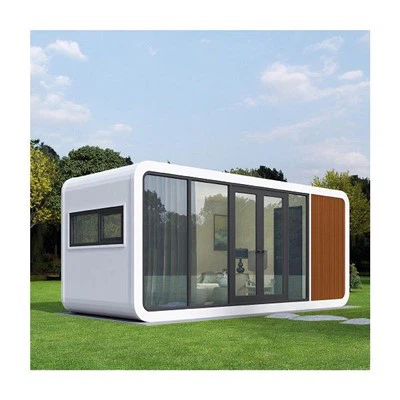

If you’ve ever spent a weekend camping in a tiny apple cabin—our signature compact, apple-orchard-inspired structures we design and sell here—you know the appeal is in disconnecting from the grid, breathing fresh orchard air, and escaping the noise of city life. But here’s a question we get asked all the time, especially from our customers who run small businesses or host longer stays: Can you use a generator in a tiny apple cabin? The short answer is yes, but there’s a lot to consider to keep your cabin safe, efficient, and true to that cozy, low-impact vibe people love. As a supplier who’s worked with hundreds of tiny apple cabin owners, I’ve got hands-on insights that go way beyond the generic “be careful” advice you’ll find online.
First, let’s talk about why someone would even want a generator for their tiny apple cabin. For many of our customers, the cabin isn’t just a vacation spot. Some turn it into a remote home office—check out our Apple Cabin Office model, which we designed specifically for people who need a quiet, scenic workspace away from their main home. Others use their cabins as pop-up retail shops for local orchard goods, so they need power for point-of-sale systems, lighting, and coolers—our Apple Cabin Shop is built with that exact flexibility in mind. Even for a personal vacation cabin, a generator can be a lifesaver if you’re hosting family for a holiday weekend, want to run a space heater on a cool fall night, or power a coffee maker in the morning without relying on solar panels that might not be fully charged. The key is matching the generator to your cabin’s size and needs—because a tiny apple cabin only has so much space, and you don’t want a generator that’s too big, too loud, or unsafe.
Let’s get into the science of it all, because there’s a right way and a very wrong way to use a generator in a small enclosed space like a tiny apple cabin. First, generator exhaust. Every internal combustion engine runs on gasoline, which emits carbon monoxide—an odorless, colorless gas that’s deadly in high concentrations. The tiny apple cabin is, by design, compact; our standard models are 8 feet wide and 12 feet long, with walls that are thin enough to keep the space feeling open but not so thick that they block air flow entirely. That means if you run a generator inside the cabin, even for 10 minutes, you could be exposing yourself to dangerous CO levels. We’ve had a customer a couple years back who tried to run a small gas generator inside their cabin during a winter storm, and they ended up needing emergency medical care for carbon monoxide poisoning. It was a scary mistake, and it’s why we emphasize this rule above all: never run a generator inside the tiny apple cabin, or in any enclosed space that’s attached to it, like a porch or a shed. The only exception is if you have a properly installed CO detector hardwired to the building, and even then, we don’t recommend it—ventilation is non-negotiable.
That leads us to the second big factor: generator size and power draw for a tiny apple cabin. Most standard tiny apple cabins have a total power demand of between 1,000 and 3,000 watts, depending on what you’re running. Let’s break that down: a small space heater is about 1,500 watts, a laptop is 50 watts, a mini-fridge is 100 watts, and a few LED lights add up to another 20 watts. If you’re running the Apple Cabin Office, you might add a printer (500 watts) and a desk lamp (15 watts), bringing total demand to around 2,250 watts. For the Apple Cabin Shop, you might have a point-of-sale system (300 watts), a small cooler (200 watts), and string lights (100 watts), so around 600 watts. So you don’t need a huge industrial generator for either model. In fact, a 2,000-watt inverter generator is more than enough for most tiny apple cabin uses. Why inverter? Because inverter generators are quieter, more fuel-efficient, and produce cleaner power that won’t damage sensitive electronics like laptops or POS systems. A standard gas generator might work for basic lighting, but if you’re powering office equipment or retail gear, you want the stable power an inverter provides.


Another consideration when choosing a generator for a tiny apple cabin is noise level. Our customers love the quiet, peaceful setting of our apple cabin communities—many are located right in working orchards, where the only sounds you hear are birds, wind in the apple trees, and a distant tractor. A loud conventional generator can ruin that vibe, and even upset the local bees that are critical for the orchard’s crop. Inverter generators are the quiet option here; most 2,000-watt models run at around 50-60 decibels when under load, which is about as loud as a normal conversation. That’s manageable, especially if you place the generator at least 10 feet away from the cabin, as recommended by all safety experts. We also tell our customers to avoid running the generator late at night, especially if their cabin is close to neighbors. If you need power overnight for a space heater, a better option might be a small propane generator or a battery-powered system—propane generators emit less fumes and can be stored safely outdoors, while battery generators (like the popular lithium-ion models) are totally silent and require no fuel. The tradeoff is that battery generators have a limited run time; a 2,000-watt battery will only power a space heater for about 4 hours, whereas a gas generator can run for 8-10 hours on a full tank.
Now, let’s talk about installation and safety for connecting a generator to your tiny apple cabin. The worst thing you can do is use an extension cord to plug your devices directly into the generator, running it through an open window or door. That’s a fire hazard, and it also increases the risk of CO fumes seeping into the cabin. Instead, you need a properly installed transfer switch. A transfer switch is a device that connects the generator to your cabin’s electrical panel, and it prevents backfeeding—when power from the generator flows back into the main grid, which can electrocute utility workers. For a tiny apple cabin, the transfer switch is simple to install, and we recommend hiring a licensed electrician to do it, especially if you’re using the cabin as an office or shop, where you have more electrical loads. The electrician can also make sure your cabin’s wiring is up to code for generator use; our tiny apple cabins are pre-wired for both solar and generator hookups, so the process is straightforward, but it’s still important to get a professional to check it.
Wait, but what about people who want to run the generator for extended periods, like if they’re staying in their cabin for a month? We get that question a lot, especially from customers who use their Apple Cabin Office as a remote workspace during the winter, when solar panels might get less sunlight. The key here is fuel storage and maintenance. Gasoline goes bad in about 30 days, so if you’re going to run the generator regularly, you might want to switch to a propane model, which can be stored safely in large tanks outdoors without the risk of evaporation or flammable fumes. Another tip: always keep the generator on level ground when running it, and never refuel it while it’s hot or still running—let it cool down for at least 15 minutes before adding more gas. We also recommend checking the generator’s oil level before every use, just like you would a car, to keep it running smoothly.
A common misconception we hear is that using a generator in a tiny apple cabin goes against the whole “tiny living” philosophy. But here’s the thing: tiny living is about customization, not restriction. If your tiny apple cabin is a business, you need power to run that business. If it’s a vacation spot where you host family, you need power to stay comfortable. The generator just needs to be chosen and used correctly. We’ve had customers who run their Apple Cabin Shop every weekend during apple picking season, using a 2,000-watt inverter generator, and they’ve had zero issues with noise, fumes, or power outages. Another customer uses their Apple Cabin Office, paired with a 2,000-watt battery generator, to work remotely in an orchard in upstate New York, where the cell service and power grid are unreliable, and they’ve said it’s been a game-changer for their work-life balance.
Let’s wrap this up with a quick recap of the do’s and don’ts for using a generator in your tiny apple cabin:
Do:
- Choose an inverter generator between 1,500 and 2,500 watts, depending on your power needs.
- Place the generator at least 10 feet away from the cabin, with the exhaust pointing away from windows and doors.
- Install a transfer switch by a licensed electrician to safely connect the generator to your cabin’s electrical system.
- Use CO detectors inside the cabin, and test them monthly.
- Choose propane or battery power if you need extended run time or quieter operation.
Don’t:
- Never run the generator inside the cabin, porch, or any enclosed space attached to the cabin.
- Use ungrounded extension cords or daisy-chain multiple cords together—this is a fire hazard.
- Refuel a hot generator, or store gas indoors.
- Run the generator late at night if it will disturb neighbors or orchard wildlife.
- Choose a generator that’s too big for your cabin’s power needs—bigger isn’t always better, and it will waste fuel and make more noise.
If you’re in the market for a tiny apple cabin that works with your power needs, whether for personal use, a home office, or a retail shop, we’re here to help. Our team has designed every model with flexibility in mind, so you can customize the electrical setup to fit your generator or solar system. Whether you’re looking for a small weekend getaway or a functional space to run your business, our cabins are built to last, blend in with apple orchard environments, and give you the comfort you need.
If you have questions about generator compatibility, or want to learn more about our tiny apple cabin models, feel free to reach out to our team to discuss your specific needs. We’re happy to walk you through every step of choosing the right cabin and power solution for your situation.
References:
- Consumer Product Safety Commission. (2022). Carbon Monoxide Poisoning from Generators. U.S. Government Publishing Office.
- Portable Power Manufacturers Association. (2021). Guide to Choosing and Using Inverter Generators for Small Structures. PPMA Publications.
- National Electric Code. (2023). Article 702: Standby Systems and Generator Connections. National Fire Protection Association.
- Orchard and Farm Rural Solutions. (2022). Power Needs for Remote Farm Businesses and Small Cabins. University Extension Publications.