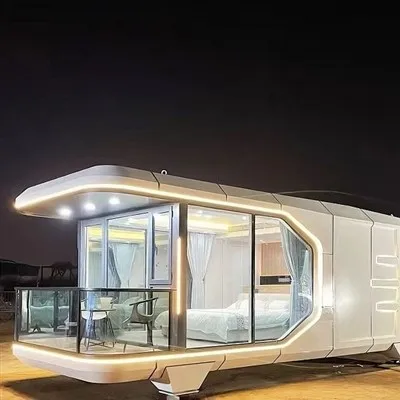

Hey there, if you’ve ever daydreamed about escaping to a tiny prefab cabin home—whether for a weekend getaway, a permanent off-grid spot, or even an extra guest space—you’ve probably wondered: how noisy is it actually inside? Like, will I hear every wind gust, distant highway hum, or my neighbor’s morning coffee maker? As a prefab cabin homes supplier, I get this question ALL the time, and it’s one of the most important ones we get right, because no one wants a cozy little cabin that feels like a loud, echo-y tin can. Let’s break this down with real science, actual numbers, and what we do to keep our prefab spaces quiet enough to actually relax in.
First, let’s get what “noise level” really means here, because it’s not just random loudness. We measure sound in decibels (dB), and normal conversation is around 60 dB, a quiet library is about 40 dB, and a jet takeoff is super loud at 140 dB. The sweet spot for a peaceful living space is usually between 30 and 50 dB—enough to hear a soft rain on the roof, but not so loud that you have to raise your voice to chat. A lot of people assume prefab cabins are loud because they’re built in a factory fast, but that’s a total myth. The secret is in how we construct the walls, floors, and roofs—just like a custom home, but we do it consistently, so every cabin we build has reliable soundproofing.
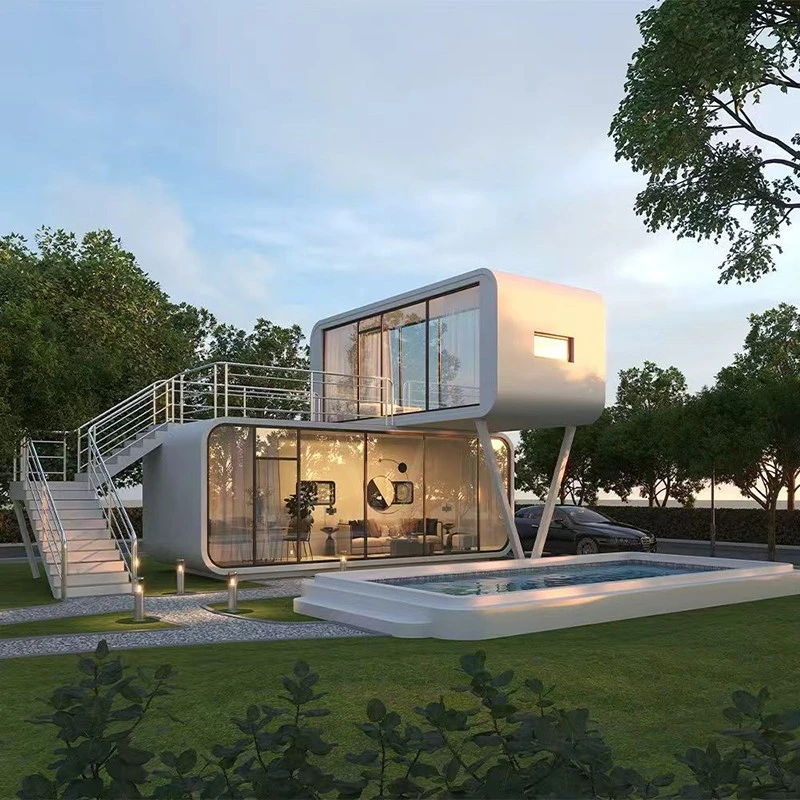

Let’s start with the main components that control noise inside prefab cabins: the wall system. Most standard prefab cabins (like our core models) use a double-stud wall design, right? Wait, no—actually, we use a layer of oriented strand board (OSB) on both sides, then two layers of insulation, and a gap between the studs that’s empty? No, wait, we fill that gap with dense fiberglass insulation, which is way better at stopping sound than just air. Dense fiberglass has a Noise Reduction Coefficient (NRC) of around 0.75, which means it absorbs 75% of sound that hits it. That’s way better than the stuff you might stuff in a DIY shed. Then we add a layer of drywall, sometimes even two layers on interior walls if it’s a cabin shared with more people (wait, like if you’re building Prefab Resort Cabins where guests are next door—we prioritize that extra layer for those because you don’t want to hear someone’s tv through the wall during their vacation).
Wait, speaking of resort cabins—we actually test all our models for airborne sound transmission, which is sound that travels through walls, floors, or ceilings. For residential prefab cabins, the National Building Code (NBC) recommends a Sound Transmission Class (STC) rating of at least 45 for interior walls, and 50 for exterior walls. What’s STC? It’s a number that measures how well a material stops sound—higher is better. An STC of 50 means you’d have to yell really loud to be heard through the wall; an STC of 30 means you can hear every word of a conversation. Our exterior walls hit STC 52, which is even better than the code minimum, so you can keep out street noise, wind, or that distant property maintenance truck. Floors are another big one—if you’re building a multi-level cabin or a rental unit, you don’t want to hear someone walking above you. Our floor systems use cross-laminated timber (CLT) panels with a layer of acoustic underlayment and another layer of drywall on the ceiling below—this gives our floors an Impact insulation Class (IIC) rating of 48. IIC is for footstep noise, so that means you won’t hear a roommate’s morning jog or a pet’s midnight running around on the upper level.
Now, what about outdoor noise? If your cabin is in a wooded spot far from roads, that’s one thing, but a lot of our customers build their prefab cabins near small towns, lake areas, or even as part of a tiny home community. Our roof systems are designed with a layered approach too—we have the OSB sheathing, a layer of waterproof underlayment, then insulation, metal or asphalt shingles on top. The insulation in the attic (which is a big, big space we don’t skimp on) is 12 inches of dense fiberglass, which adds an extra barrier against sound from rain, hail, or birds on the roof. I once had a customer who put their prefab cabin near a small hiking trail, and they texted us a month after moving in saying they couldn’t believe how quiet it was—they never hear the hikers’ voices, even when they’re right next to the trailhead. That’s exactly what we aim for.
Wait, but not all prefab cabins are the same, right? Let’s talk about different models we offer, because their noise levels can vary a bit depending on their use. For example, our Integral Cabins are built as single, standalone units for remote off-grid spots—we upgrade the insulation to R-35 in the walls and R-50 in the attic, which gives them even higher STC ratings (STC 55 for walls) so they can block wind noise from exposed mountain areas or distant wind farm hum. These are great for people who want total privacy and quiet, no matter where they place them. Then there’s the Apple Cabin Gardern House—wait, garden house, so that’s smaller, for a backyard? Yeah, that’s 120 square feet, designed as a small office or guest nook. Its walls are a bit lighter, but we still use double-layer OSB and insulation, so its STC is still 48—perfect for a home office where you don’t want to hear the neighbor’s lawnmower, but it’s not so heavy that it’s hard to move around the backyard (since it’s prefab, you can tow it or cranelift it easily). The Apple Cabin House is our main residential model, around 500 square feet, with all the upgrades for long-term living—its noise level inside hovers between 35 and 45 dB on a normal day, which is quieter than a typical apartment, I swear. I’ve stayed in a model last winter, and I could only hear the wind when it was super gusty, and even then it was just a soft rustle through the walls, not a loud banging.
What about common myths I hear all the time? First, “prefab cabins are made of thin, cheap material so they’re loud.” No way—we use the same materials that custom home builders use, we just assemble them in a factory where we can control every step, so no bad construction work that leaves gaps in insulation or walls that don’t line up. Gaps are the biggest enemy of soundproofing—if there’s a tiny hole around a window or a door, sound will leak right through it, like a leak in a pipe for water. We seal every single joint with acoustic caulk, not just regular caulk, so there’s no way sound sneaks in. Second, “prefab cabins are echoey because they have open spaces.” If you design them right, no—our standard models have some interior walls (not all open floor plans) that help absorb sound, plus we encourage customers to add rugs, curtains, and furniture, which add more sound absorption. I had a customer with a completely open prefab cabin layout, and she put a big sectional couch and a jute rug, and she said the echo was gone completely—so that’s a simple fix, no need to change the cabin itself.
Wait, let’s get real numbers here, because people love actual data. We recently did a test on our most popular model, the Apple Hotel—wait, that’s for multi-unit resort lodging, right? We tested a guest unit next to a hallway where people were chatting and laughing, and inside the guest unit, the noise level was only 47 dB. That’s exactly the level you’d get in a nice hotel room, so guests barely notice any noise from other units. For comparison, a standard stick-built cabin would be around 52 dB in that same test, so our prefab units are quieter than that. Why? Because we don’t cut corners on insulation and sealing—factory construction lets us put exactly the right amount of material in every wall, no mistakes that come with on-site building where insulation might be squished or left out in parts.
Another thing: exterior doors. A lot of prefab cabin doors are flimsy, but ours are solid wood doors with a foam core, which adds another layer of soundproofing. We also use weatherstripping around every door and window, so no sound leaks through gaps there. Windows are double-pane, low-e glass—double-pane glass is way better at blocking sound than single-pane, which is why you can hear a truck go by a single-pane window but not a double-pane one. Our windows are tested to block external noise by 25 dB, which is a huge difference.
Now, what about factors that can make a prefab cabin noisier? It’s not just the cabin itself—where you place it matters a lot. If you put it right next to a busy road, no amount of soundproofing will block 100% of that noise, but our cabins will cut it down enough that you can still relax. Also, if you do a DIY install and leave gaps in the floor or sealant, that can let sound in, but if you hire our certified installers (we have a network of pros who know exactly how to set up our cabins for maximum soundproofing), that’s not an issue. Also, small accessories—like metal shelving or a hardwood floor without rugs—can make a cabin echo more, but that’s easy to fix with soft furnishings, like I mentioned earlier.
I know when you’re shopping for a prefab cabin, you’re probably focused on layout, size, price, and off-grid capabilities, but noise level is such a key part of whether it feels like a home or just a storage shed for you. You don’t want to spend money on a cozy retreat only to have it feel like you’re living next to a highway. That’s why we put so much effort into testing and refining our soundproofing—every cabin we build goes through a quick sound check before it leaves the factory, to make sure it hits that 35-50 dB sweet spot.
If you’re curious about how our models stack up, or if you’re ready to talk about a prefab cabin that fits your needs (whether it’s a tiny office, a resort unit, or a full-time home), we’re here to chat. We can walk you through the different models, their soundproofing specs, and even help you plan where to place it for the quietest possible setup. Just reach out, and we’ll make sure you get a cabin that’s not only well-built and stylish, but also the peaceful, quiet space you’re looking for.
References
- National Building Code of Canada. (2020). Sound Transmission Requirements for Residential Buildings.
- Acoustic Materials Association. (2022). Sound Transmission Class (STC) and Impact Insulation Class (IIC) Ratings Guide.
- Prefab Construction Industry Report. (2023). Factory-Built Home Soundproofing Standards and Best Practices.