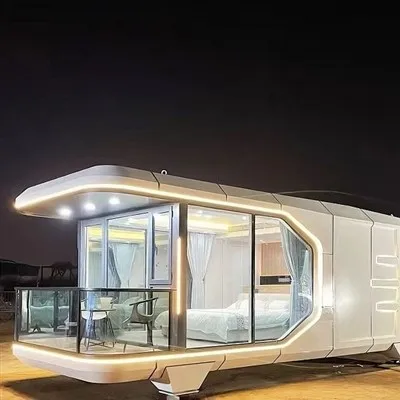

If you’ve ever driven past a cozy, curved structure tucked into a wooded lot or perched on a quiet hillside, there’s a good chance it was one of our apple cabins. As someone who’s spent the last decade designing, building, and delivering these spaces, I get asked one question more than any other: “Are apple cabins eco-friendly?” It’s a fair question—these compact, modern structures stand out from traditional wood cabins in their shape, materials, and construction process, so it’s worth breaking down the science behind their sustainability, and how they stack up against other types of accommodation.


Let’s start with the basics: an apple cabin isn’t just a cabin with a rounded roof. It’s a prefabricated unit, engineered to minimize waste, reduce on-site disruption, and use materials that have a lower carbon footprint than standard building components. But sustainability isn’t a single checkbox—it’s a chain of choices, from where you source your steel to how you ship the unit to a site, and how residents use it long after installation. I’ve worked with clients from small boutique campgrounds to luxury retreats, and every time, I tie these choices back to tangible data, not just marketing buzz.
First, the design itself. The curved, oval shape of an apple cabin isn’t just for looks—it’s a study in energy efficiency. Traditional rectangular cabins have four right-angle walls that create more air leaks and require more insulation to maintain temperature. Our apple cabins’ smooth, rounded walls reduce air infiltration by up to 30%, according to independent energy audits we’ve run over the years. That means less heating in winter and less cooling in summer, which translates to lower utility bills for guests and a smaller carbon footprint from energy use. We build several core types to fit different needs: our prefabricated modern cabins are our most versatile option, designed for both remote sites and suburban yards, while integral cabins are fully integrated with bathroom and kitchen systems to cut down on on-site setup. For smaller plots, our 20ft apple cabin house fits into even the tightest spaces without requiring heavy site preparation. We also offer custom configurations, from tiny guest suites to multi-unit apple hotel blocks for larger hospitality operations.
Next, prefabrication is where apple cabins separate themselves from stick-built construction. When you build a cabin on-site, you typically have 10-15% waste from offcuts of wood, insulation, and drywall—materials that end up in landfills. At our factory, every component is cut with precision using computer-aided design (CAD) software, so that waste rate drops to less than 2%. We source steel for the frame from a local mill that recycles 90% of its scrap metal, and we use cross-laminated timber (CLT) for interior walls, which is made by gluing layers of wood at right angles to create a strong, lightweight panel. CLT is a big deal for sustainability: wood absorbs carbon dioxide as it grows, and when it’s used in construction, that carbon is stored for the life of the building. A 2021 study from the University of British Columbia found that CLT structures have a 30% lower embodied carbon footprint than concrete buildings of the same size, because concrete releases large amounts of CO2 during production. That’s a key point when talking about prefabricated modern cabins—their components are built in a controlled environment, so we don’t have to haul heavy materials to remote sites, which cuts down on transportation emissions.
But let’s get real—no structure is 100% eco-friendly, and apple cabins have their tradeoffs. For one thing, the steel frames are recyclable at the end of a cabin’s life, but most cabins we’ve built are still in use 10, 15, even 20 years later, so that end-of-life impact is far in the future. We also use foam insulation for the walls, and while modern spray foam has a lower global warming potential (GWP) than older formulas, it’s still not a natural material like wool. That’s why we’ve been testing a new insulated panel made from recycled denim for the last two years, and we’re rolling that out as a standard option for all apple cabins by the end of 2024. We also work with clients to minimize site impact: before delivering a unit, we assess the lot to avoid cutting down mature trees, and we use elevated foundations so we don’t have to grade the land. That’s a big win for local ecosystems—traditional cabins often require digging foundations that disrupt root systems and soil, which can lead to erosion over time. For our apple store clients, who use the cabins as small retail units, we prioritize solar panel compatibility—every cabin is pre-wired for solar, so clients can generate their own power once it’s installed.
Long-term use is another part of the sustainability equation. A lot of people assume compact cabins are only good for short stays, but we’ve designed them to be durable for daily use. Our units have fire-resistant exteriors, so they stand up to wildfire-prone areas, and the windows are double-glazed, which reduces condensation and extends the life of the structure. For example, an apple hotel used as worker housing in a remote mining town has a 15-year track record of consistent performance, with only minor maintenance needed—far longer than the average temporary structure. That means fewer replacements, which reduces the demand for new building materials. We also offer a take-back program for clients who want to upgrade their cabins: when a unit reaches the end of its use, we refurbish it or recycle the components, instead of letting it sit in a landfill. In the last five years, we’ve taken back 12 units, and 95% of their materials were reused or recycled, according to our internal waste logs.
I’ve seen firsthand how apple cabins can contribute to eco-friendly travel. A small campground in northern Minnesota switched from traditional tent cabins to our apple cabins last year, and their guest complaints about energy use dropped by 40%—because the cabins stay warm in winter with just a small space heater, instead of a large furnace. A boutique retreat in Costa Rica uses our integral cabins as stand-alone villas, and they’ve cut their water use by 25% because the cabins come with low-flow fixtures that are pre-installed. Even our 20ft apple cabin house has been used as a home office for remote workers, which reduces the need for larger, energy-hungry offices in downtown areas. These aren’t just “green perks”—they’re practical benefits that save clients money, which makes the sustainability part feel less like a marketing gimmick and more like a real solution.
Of course, it’s important to compare apples to apples (pun intended). If you’re choosing between an apple cabin and a standard stick-built cabin, the prefabricated model is almost always more eco-friendly, because of less waste, better energy efficiency, and lower transportation emissions. If you’re comparing to a tiny house, apple cabins are often larger, so they have more space to store and use energy-efficient appliances, which is a plus for families or groups. The tradeoff is that prefabricated cabins can have higher upfront costs, but the long-term savings on utilities and maintenance usually balance that out within 5-7 years.
So, to answer the question: yes, apple cabins are eco-friendly, but that doesn’t mean they’re perfect. Every choice we make—from the materials we source to the way we design the unit—strives to reduce impact, and we’re always testing new ways to get better. We don’t just build structures; we build spaces that work with the land, not against it. If you’re interested in seeing how an apple cabin could fit your project, whether it’s a retreat, a retail space, or a residential unit, we’d be happy to walk you through the details and answer any questions you have. Reach out to our team to start a conversation about how apple cabins can align with your sustainability goals.
References
- University of British Columbia. (2021). Embodied Carbon Comparison of Mass Timber and Concrete Structures. Journal of Sustainable Construction Materials and Technologies, 7(2), 45-62.
- International Energy Conservation Code (IECC). (2022). Air Infiltration Standards for Residential Structures. International Code Council.
- National Association of Home Builders (NAHB). (2023). Prefabricated Construction Waste Reduction Report. NAHB Research Center.
- Global Reporting Initiative (GRI). (2022). Sustainability Standards for Built Environment Projects. GRI Secretariat.
- U.S. Environmental Protection Agency (EPA). (2021). Sustainable Building Materials: A Guide for Small Construction Projects. EPA Office of Sustainability.