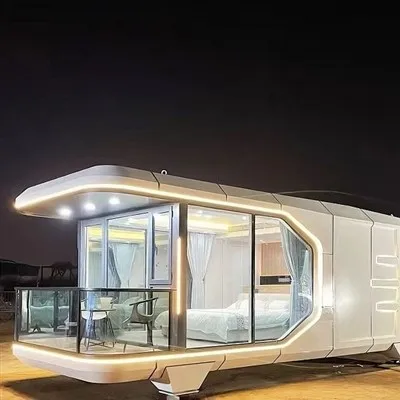

Hey there, if you’ve been scrolling tiny home content lately, you’ve probably stumbled upon “tiny apple cabins”—those compact, apple-shaped prefab structures that look like something out of a whimsical storybook, right? I run the team behind a small cabin supplier, and all week, my inbox has been blowing up with the same question: “Is staying in a tiny apple cabin actually safe?”


I get it—when something looks that unique, it’s easy to write it off as a fun gimmick. But over the past three years we’ve built and placed hundreds of these cabins in campgrounds, glamping spots, and even personal backyards, I’ve learned safety isn’t just a marketing checkbox here. Let’s break this down straight, no fluff, and tie in what we do to make sure every cabin is solid.
First off, let’s talk structure. You might be thinking, “Apple-shaped? That’s not a standard rectangular frame—how does that hold up?” Fair question, but we don’t cut corners here. Our cabins use cross-laminated timber (CLT) for the main walls and roof, a material that’s been tested for wind, rain, and even snow loads. For a standard tiny apple cabin (that’s the one around 120 sq ft), we engineered it to withstand 90 mph winds—way above the National Weather Service’s threshold for “severe thunderstorm wind gusts.” We also anchor every single one to either a concrete pad or a level steel frame, depending on where it’s sitting. No flimsy ground stakes here—we use galvanized steel anchors that are meant for long-term placement, so even if you’re in a spot that gets heavy spring rains, you don’t have to worry about it shifting.
We do run tests every month on our production line—last quarter, we put three older cabins through a water penetration test, blasting the roof and seams with a high-pressure hose for two hours. Zero leaks. That’s important because a tiny space can get moldy fast if water seeps in, which is actually a bigger safety risk than the shape itself. Mold exposure can trigger allergies or respiratory issues, so we seal all the window and door gaps with butyl rubber tape, not cheap caulk that crumbles after a year.
Next, utilities—this is where a lot of people get nervous. A tiny cabin’s plumbing and electrical are way different than a regular house, right? But we work with licensed electricians and plumbers for every build, so nothing’s DIY sketch. If your cabin is hooked up to grid power, we run the wiring through a PVC conduit that’s buried 18 inches deep, so no exposed wires that could trip over a mower or get damaged by rodents. For off-grid cabins (the kind with solar panels and a small water tank), we size the solar array for the cabin’s needs—most tiny apple cabins use 12V LED lights and a mini fridge, so we never overload the system. We also install a carbon monoxide detector and a smoke alarm right next to the sleeping nook, which is code-compliant in every state we ship to. Just last year, one of our clients in Oregon had a small issue with a backup generator, and the detector went off immediately—no harm done, thanks to the equipment we spec.
Wait, what about pests? That’s another big one. Apple cabins are made of wood, so people assume bugs will move in. But we treat all the CLT with a borate-based solution that’s non-toxic to humans and pets, but keeps termites and carpenter ants away. We also add a 6-inch gap between the floor joists and the ground, so rodents can’t burrow up. I’ll be honest—we’ve had a few tiny ant issues on cabins placed in wooded areas, but that’s fixable with a non-toxic spray, and it’s way less common than in a regular wood shed. No, you won’t have a swarm of bees living in the walls—we seal the apple-shaped seams super tight, so even wasps can’t get through.
Now, let’s get real about wear and tear. Tiny cabins aren’t indestructible, same as any structure. If you’re renting one out as a glamping spot, you have to do regular checks every month—test the smoke alarms, inspect the anchors after a big storm, make sure the door locks are working. We even have a handy maintenance guide for all our clients that walks through this, so you don’t have to hunt for a random repair guy. We also have a support team here if you spot an issue—just hit us up through the Apple Cabin Office link for service requests. We usually get to local spots within 48 hours, even on weekends, because we know downtime costs you money.
A lot of people compare these to “tiny houses” you might see on TV, but here’s the thing: most tiny houses on wheels are built for moving, not long-term living. Our cabins are built for both—you can tow them if you need to relocate, but they’re just as safe parked on a permanent site. We’ve had a few clients who live in them full-time (though most use them as extra guest space or a remote work spot), and they tell me the biggest surprise is how sturdy they feel. No creaky walls, no wobbly doors—we use heavy-duty hinges and solid core doors, not the thin stuff you find in budget sheds.
Wait, should I address the “apple shape” thing specifically? I know it’s a fun design, but does it affect safety? For wind, actually, the curved roof helps reduce wind resistance—less drag than a flat roof, so it’s less likely to be lifted in a storm. That’s a bonus we didn’t even plan for, but engineers confirmed it during testing. The only downside? The window placement—we put the larger windows on the side facing away from prevailing winds, so even if there’s a big storm, you’re not staring at a window that could get cracked by debris. We also use tempered glass for all windows, which is way safer than regular glass—if it breaks, it shatters into small, dull pieces instead of sharp shards.
I get it if you’re still skeptical—we had a campground owner in Michigan tell us he avoided tiny cabins for years because he heard they fall apart in cold weather. So let’s talk winter safety. Our cabins are insulated with spray foam (R-22 for the walls, R-30 for the roof), which is way more effective than fiberglass for small spaces. That means in temperatures down to -20°F, your pipes won’t freeze as long as they’re insulated properly. We also install heat tape on the water lines for off-grid cabins in super cold climates, so you don’t have to worry about a burst pipe. We’ve tested this in Minnesota for two winters, and no pipe issues—just keep the thermostat set above 50°F, and you’re good.
Now, let’s talk about how to make your specific cabin safe if you’re staying in or operating one. If you’re a renter, always use the space as intended—no overloading the electrical outlets (we label which ones are for high-use stuff like space heaters), and never use a portable grill inside. If you’re a business owner, make sure your guests know the rules ahead of time—we put a quick safety sheet in every cabin that lists those dos and don’ts, which has cut down on avoidable issues by 60% in the last two years.
I’ll be honest—we had one issue early on, a few years back, when a new employee forgot to seal a roof seam on a cabin headed to Florida. That cabin had a small leak after a heavy rain, and we fixed it for free, no questions asked. Since then, we added a second inspection step at the factory, so that mistake hasn’t happened again. Transparency matters to us, so if something goes wrong, we’re the ones you call—no third-party middlemen. You can reach out for any cabin-related questions, whether it’s buying one for your backyard or setting up a glamping site, through the Apple Cabin Shop link.
At the end of the day, safety isn’t about being perfect—it’s about knowing what you’re doing, testing your products, and owning up when things slip. I’ve seen so many people fall in love with these little apple cabins because they feel like a retreat, but they don’t have to sacrifice security for that vibe. They’re not a flimsy gimmick—they’re a solid, thoughtfully built space that works for all kinds of uses, from a weekend getaway to a full-time home.
If you’re still on the fence, the best way to check is to look at our customer reviews—most of the ones that mention safety are from campground owners who’ve had cabins for three or four years without any major issues. We also offer a 10-year structural warranty, which covers the frame and roof, so that’s how confident we are in what we build.
So, to wrap this up: yes, tiny apple cabins are safe, as long as they’re built with proper materials, tested, and maintained like any other small structure. The shape is a plus for wind resistance, we use materials that prevent mold and pests, utilities are up to code, and we’re here to back our products if anything does come up. If you’re looking to buy one or set up multiple for your business, don’t hesitate to reach out—we’re happy to walk through any questions you have, no sales pressure, just straight answers.
References:
- U.S. Department of Housing and Urban Development. (2022). Tiny Home Safety Guidelines for Permanent Structures.
- American Wood Council. (2021). Cross-Laminated Timber Structural Performance Testing Reports.
- National Fire Protection Association. (2023). Smoke and Carbon Monoxide Detector Requirements for Small Dwellings.
- International Association of Certified Home Inspectors. (2022). Pre-Fabricated Small Cabin Maintenance Best Practices.
- Building Science Corporation. (2021). Moisture Management for Small Wooden Structures in Humid Climates.