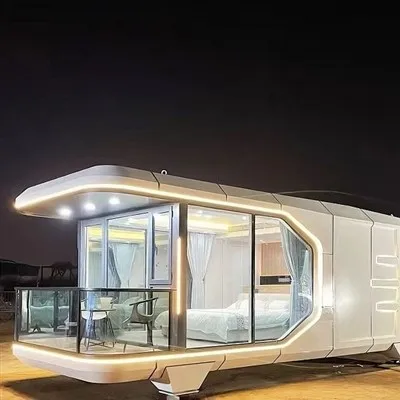

Hey there! I'm [Your Name], and I'm part of a folding container supplier. You might be wondering, “How does a folding container work?” Well, let's dive right in and explore this nifty invention.
The Basics of Folding Containers
First off, what exactly is a folding container? It's a container designed to be collapsible, which is a huge advantage compared to traditional non - folding ones. When it comes to transportation and storage, space is money. Regular containers take up a ton of room, whether they're being shipped on a truck, a train, or a ship. But folding containers can be collapsed down to a fraction of their normal size, making them super efficient.
Let's talk about the structure. A folding container is usually made up of a frame and panels. The frame is like the skeleton of the container. It's typically made from strong materials like steel or aluminum. These materials are chosen because they can withstand a lot of stress and weight. The panels, on the other hand, form the walls and roof of the container. They can be made from various materials, such as corrugated steel, fiberglass, or even insulated panels for better temperature control.


How They Fold
The folding mechanism is the heart of these containers. There are different types of folding designs, but most follow a common principle. The panels of the container are connected to the frame using hinges. These hinges allow the panels to move and fold in a specific way.
For example, in some folding containers, the side panels can be folded inwards towards the center of the container. Then, the end panels are folded on top of the side panels. This way, the container goes from a large, box - shaped structure to a much smaller, flat package. It's like folding up a piece of paper, but in a more complex and engineered way.
Some folding containers have a more elaborate folding system. The Z Shape Folding Container House is a great example. Its unique Z - shaped design allows for a very compact fold. The panels are arranged in such a way that they can be neatly stacked on top of each other, reducing the container's volume significantly.
Unfolding and Setting Up
Once the folding container reaches its destination, it's time to set it up. Unfolding a folding container is usually a straightforward process. First, you need to make sure the area where you're setting up is flat and stable. Then, you start by unfolding the end panels. After that, you unfold the side panels and lock them into place.
Most folding containers come with locking mechanisms to keep the panels in the unfolded position. These can be simple latches or more complex locking systems, depending on the design and the intended use of the container. Once all the panels are locked, the container is ready to be used.
Applications of Folding Containers
Refugee Housing
Folding containers are a game - changer in the field of refugee housing. The Folding Container Refugee House can be quickly transported to refugee camps. Since they can be folded, a large number of them can be shipped in a single transport. Once at the camp, they can be set up in a short time, providing shelter for those in need.
Office Spaces
The Folding Container Office is another popular application. For construction sites or temporary projects, these containers can be easily moved and set up. They can be customized with windows, doors, and even interior partitions to create a functional office environment.
Army Stations
In military operations, mobility is key. The Folding Container Army Station can be quickly deployed to different locations. They can be used as barracks, command centers, or storage facilities. The ability to fold them up makes it easy to transport them by various means, including helicopters in some cases.
Farm Houses
Farmers can also benefit from folding containers. The Folding Container Farm House can be set up on the farm quickly. It can serve as living quarters, storage for tools and equipment, or even as a small processing area. And if the farmer needs to move to a different location on the farm, the container can be easily folded up and relocated.
Advantages of Using Folding Containers
One of the biggest advantages is cost - savings. Since they take up less space during transportation and storage, the shipping and storage costs are significantly reduced. This is especially important for businesses that need to move a large number of containers.
Another advantage is flexibility. They can be used in a variety of applications, as we've seen. And if the need for the container changes, it can be easily moved and re - used in a different location or for a different purpose.
They're also environmentally friendly. By reducing the amount of space needed for transportation and storage, less fuel is consumed, which means fewer emissions. And since they can be re - used multiple times, they help reduce waste.
Maintenance and Durability
Folding containers are built to last. The materials used in their construction are chosen for their durability. However, like any other piece of equipment, they do require some maintenance.
Regular inspections are important to check for any damage to the frame, panels, or locking mechanisms. If there are any loose hinges or damaged panels, they should be repaired or replaced as soon as possible. Cleaning the container regularly can also help prevent corrosion, especially if it's made from metal.
Why Choose Our Folding Containers
As a folding container supplier, we take pride in offering high - quality products. Our containers are designed with the latest technology and engineering to ensure easy folding and unfolding. We use only the best materials to guarantee durability and long - term performance.
We also offer a wide range of customization options. Whether you need a container for a specific application or with certain features, we can work with you to create the perfect solution.
If you're interested in our folding containers, don't hesitate to reach out. Whether you're a business looking for a cost - effective storage solution or an organization in need of emergency housing, we have the right container for you. Contact us today to start the procurement process and discuss how our folding containers can meet your needs.
References
- Engineering studies on portable structures
- Case studies on the use of folding containers in different industries.